
Exercise for Type 2 Diabetes: Programs and Group Classes in Brisbane
If you’re among the almost 1.2 million Australians living with type 2 diabetes, you’ve probably been told that exercise helps. What’s less often explained is how much it helps, why it works, and what kind of exercise makes the difference.
For this condition, prescribed exercise is more than a “nice-to-have” alongside your treatment. It’s one of the most effective tools available.
Why exercise works for type 2 diabetes
Type 2 diabetes is a condition where your body can’t manage blood glucose properly, either because it doesn’t make enough insulin or because your cells stop responding to it well (insulin resistance). Exercise helps with both, and it does it directly.
When your muscles work, they draw glucose out of your blood for fuel, which lowers your blood glucose during and after activity. Plus, a single session keeps working after you’ve finished, which means your muscles stay more sensitive to insulin for the next 24 to 72 hours. That’s also why the guidance says not to let more than two days pass between sessions. The benefit fades, and regular movement tops it back up.
Australian general practice guidance puts exercise, alongside food and any medication your GP prescribes, at the centre of managing type 2 diabetes.
What the evidence shows
The number your GP watches for long-term blood glucose control is HbA1c, which reflects your average blood glucose over the past two to three months. Across clinical trials, structured exercise programs lower HbA1c by around 0.7 percentage points on average (individual results vary), and larger reductions come from programs of more than 2.5 hours a week. That’s a meaningful shift in your long-term blood glucose control.
A program that includes both aerobic exercise and resistance training is commonly recommended, because the two work in complementary ways.
The benefits reach beyond blood glucose. Heart disease risk runs higher with diabetes, and exercise improves your blood pressure and heart health. It also supports your weight and body composition, your strength and energy for everyday life, and your mood.
Exercise doesn’t replace the treatment your GP prescribes. It works alongside your medication, food and monitoring, and for many people it’s the part of their management they can feel working.
What kind of exercise, and how much
Most adults with type 2 diabetes are encouraged to build towards at least 2.5 hours a week of moderate activity, spread across several days, plus resistance work on two or more days. Doing more brings extra benefit, and while the exercise physiology guidelines suggest building further still, the first goal is simply to get there.
For many people that can seem a long way off, but the important thing is making a start. Wherever you’re starting from, there’s a program that fits, and building up gradually is exactly what an individually prescribed program is for. Walking, cycling, swimming and resistance work all count, and the right mix, starting point and progression depend on your fitness, your other health conditions and any complications of diabetes.
Exercising safely with diabetes
Diabetes can bring considerations that change what’s safe, and that’s the difference between a generic program and a clinical one. If you use insulin or a sulfonylurea, we’ll show you how to manage your blood glucose around exercise and keep some fast-acting carbohydrate on hand. We’ll also work around anything else diabetes has affected, like your feet, your eyes or your heart, and check in with your GP where it helps.
An Accredited Exercise Physiologist (AEP) is a university-qualified allied health professional, accredited through ESSA. We’re clinicians, and exercise is our treatment. We work alongside your GP, your diabetes educator and your dietitian, so everything pulls in the same direction.
Our diabetes group program
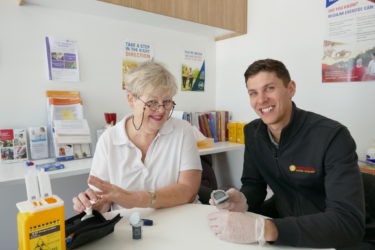 We run group exercise and education classes for people with diabetes at our Brisbane clinics, led by our Accredited Exercise Physiologists. You get an individual assessment first, then small-group sessions combining cardiovascular and resistance exercise with practical education: blood glucose monitoring, food, exercise strategies and managing your health. You’ll also take home an education pack and a home exercise program.
Our participants have averaged a 2.28 mmol/L drop in blood glucose levels and a 2% reduction in body fat over their 8-week program, along with gains in strength, fitness, balance and flexibility.
If you have type 2 diabetes, Medicare can help with the cost. With a GP referral under a chronic condition management plan, you can access an initial assessment with an Accredited Exercise Physiologist and up to eight group sessions each calendar year, on top of any individual allied health sessions on your plan. With a referral, your initial assessment is bulk billed and group classes attract a Medicare rebate.
Ask your GP whether a referral applies to you, or ask us and we’ll help you work it out. You can also check our Group Exercise Timetable for class times.
Getting started
Whatever your age, fitness or starting point, there’s a place for you here. We start by getting to know you, your health and what you want to be able to do, then build your program from there.
BodyTrack’s exercise programs are evidence-based and tailored to each individual. Chronic health conditions may be eligible for referral under Medicare’s GP Chronic Condition Management Plan, and private health fund eligibility may apply. GPs and other referrers can find what they need on our referrals page.
Ready to start? You can Book Online, Send a Message or Call Us.
Frequently asked questions
Does exercise lower blood sugar?
Yes. When your muscles work they use glucose from your blood for fuel, which lowers your blood glucose during and after exercise. Regular exercise also makes your body more sensitive to insulin for up to 72 hours after each session, so your glucose control improves over time, not just on the day.
What’s the best exercise for type 2 diabetes?
The best results usually come from doing both: aerobic exercise, like walking, cycling or swimming, and resistance training two or more times a week. Australian guidance recommends building towards at least two and a half hours of moderate activity a week, spread across several days, with no more than two days in a row off. An Accredited Exercise Physiologist prescribes the right mix and starting point for you.
Can I exercise if I’m on insulin?
Yes, with the right plan. Insulin and some diabetes medications can drop your blood glucose too low around exercise, so we show you how to check your levels before a session and keep fast-acting carbohydrate on hand. It’s very manageable once you know your routine.
Are diabetes exercise classes covered by Medicare?
For people with type 2 diabetes, yes. With a GP referral, Medicare subsidises an initial assessment with an Accredited Exercise Physiologist plus up to eight group sessions each calendar year, in addition to any individual allied health sessions on your care plan. Ask your GP, or ask us and we’ll help you work out your eligibility.
Do I need to be fit to start?
Not at all. Your program starts where you are and builds gradually, and your first session is an assessment and a conversation, not a workout.
Reviewed by Daniel Harth, Accredited Exercise Physiologist. Last reviewed August 2026.
What it costs, and what you can claim
The group class is $32.50 a session with a $20.25 Medicare rebate when you’re referred under a care plan, and class pass packages are available. Our pricing page has the full fee list, including one-to-one appointments.
There are several ways to pay less than the full fee. Ask your GP about a GP Chronic Condition Management Plan, which covers up to five subsidised allied health sessions in a calendar year. Private health rebates may also apply.
Not sure which applies to you? Call us on 07 3870 4119 and we’ll work it out with you before you book.
What our clients say
“I enrolled in Bodytrack’s first Type 2 Diabetes exercise program after seeing my diabetic educator as I was looking for some exercise guidance. The program was just what I needed! It was very obvious how much my blood sugar reading dropped after completing the exercise sessions. I enjoyed the program and the support provided by all the team so much that I have since completed two maintenance programs!!”
Karen O’Neill – Bodytrack client
Send a booking enquiry | Call 07 3870 4119 | Book online
Related reading
- Group exercise timetable
- Exercise physiology for chronic conditions
- Telehealth exercise physiology
- Information for referring GPs
Sources
- Australian Institute of Health and Welfare, Diabetes: Australian facts: how many Australians live with type 2 diabetes
- RACGP, Management of type 2 diabetes: exercise as core first-line management, and the weekly activity targets
- Exercise and Sports Science Australia: Hordern et al., position statement on exercise for type 2 diabetes and pre-diabetes: prescription and progression
- Umpierre et al., JAMA, 2011: the average HbA1c improvement from structured exercise programs
- American Diabetes Association, Colberg et al., Diabetes Care, 2016: managing blood glucose around exercise, and precautions for nerve, eye and heart complications
- Services Australia, GP Chronic Condition Management Plan: the subsidised assessment and group sessions (MBS items 81110 and 81115)